

Laparoscopy
Laparoscopy is an extremely useful minimally invasive, keyhole surgical procedure used to diagnose and treat many different gynaecological conditions. Dr Sam Daniels has completed advanced training in laparoscopic surgery and is known for successfully managing highly complex operations, including those declined by other surgeons.
What is laparoscopic surgery?
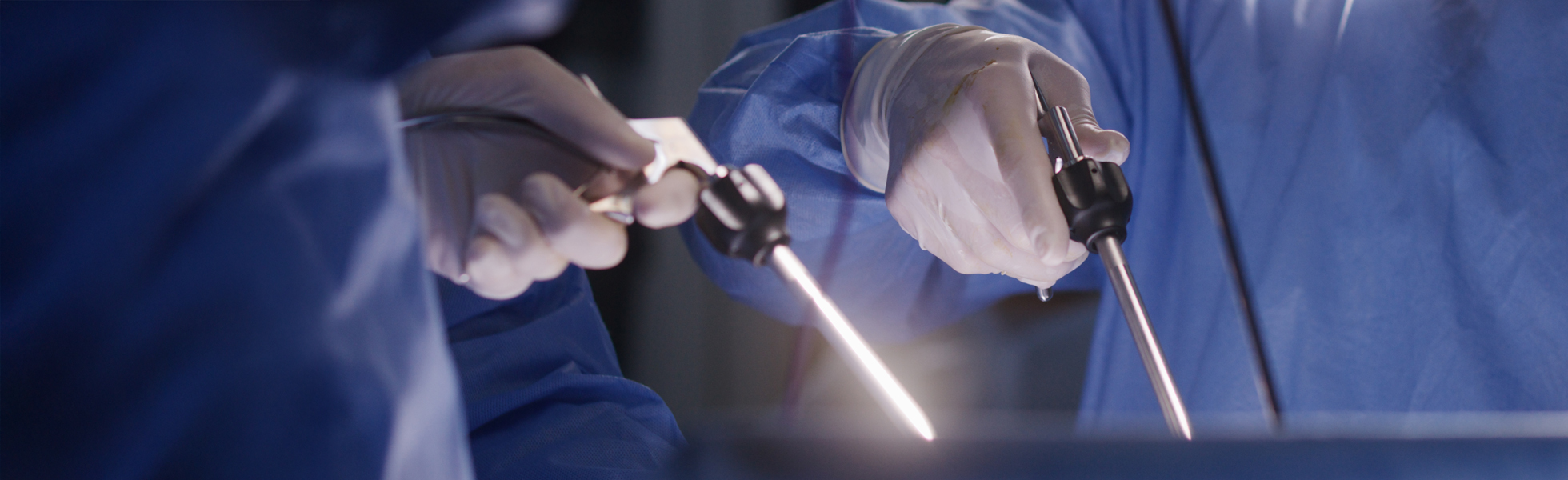
A laparoscopy is a minimally invasive surgical technique used to diagnose and treat concerns inside the abdomen and pelvis. It has replaced the riskier open surgery alternative known as a laparotomy for managing most related conditions.
As a keyhole surgery, a laparoscopy involves tiny incisions no longer than 5cm, created in your abdomen. This provides access for the laparoscope, a long thin tube equipped with a camera and light, as well as any other instruments needed.
Laparoscopy can be used for diagnosis of gynaecological conditions, providing an internal view of your abdominal and pelvic structures. It can also be used to operate on and treat any problems found at the same time as the diagnostic investigations, reducing your need to return for another procedure.
Advantages of laparoscopy over laparotomy
As a minimally invasive technique, laparoscopy comes with several advantages compared to the open surgery alternative known as a laparotomy. Although laparotomy is still a useful technique in gynaecology for certain situations, the laparoscopic approach has been increasingly preferred over the last few decades.
Compared to a laparotomy, laparoscopy is associated with:
- Faster recovery time
- Shorter hospital stay
- Earlier return to work and your usual activities
- Less scarring
- Less post-operative pain
- Less blood loss
- Lower risk of complications
- Higher surgical precision due to the magnified, high definition view
What is laparoscopic surgery used for in gynaecology?
In gynaecology, laparoscopic surgery is used in the management of an extremely wide range of conditions, including:
- Investigation and management of pelvic pain
- Treatment of the various causes of infertility
- Removal of uterine fibroids (myomectomy)
- Removal of ovarian cysts
- Excision of the abnormal tissue found in endometriosis – laparoscopy for endometriosis is the current gold standard for both diagnosing and treating endometriosis
- Managing ectopic pregnancies
- Treatment of pelvic organ prolapse
- Diagnosis and treatment of pelvic inflammatory disease
- Laparoscopic hysterectomy, the surgical removal of the uterus
- Surgery for incontinence
- Removal of pelvic scarring and adhesions
All of these conditions can be managed with either conventional laparoscopy or with robot-assisted surgery.
What happens during the laparoscopy procedure?
Dr Sam performs laparoscopic surgery under general anaesthesia at Northern Beaches Hospital, Macquarie University Hospital, and North Shore Private Hospital. You can expect to return home on the same day, though more extensive procedures may require you to stay for one or two nights.
Once you are comfortably under general anaesthetic, small keyhole incisions are made in your abdomen, including one around your bellybutton. The laparoscope, a tube with a camera and light attached, is inserted through this incision, sending a high-definition real-time video to an external screen. Additional surgical tools can be introduced through the other incisions if you need surgical treatment for any problems found at the same time.
After your operation, Dr Sam closes your incisions with sutures and applies a wound dressing. Because of the small size of these cuts you can expect minimal scarring.
Recovery after a laparoscopy
Laparoscopic surgery is a minimally invasive operation, which comes with a greatly reduced recovery time compared to open surgery. Typically, you can expect to return to work within 1-2 weeks, with most women feeling well enough to go back to deskwork and light activity by three to five days post-op.
In the first few days after your laparoscopy, it is common to experience pain in your shoulder as a result of the irritation to nerves from the carbon dioxide gas used to expand your abdomen during the surgery. You may also feel some pain, bloating, and discomfort in your belly. Pain can usually be managed with medications and hot or cold compresses. It is also normal to have some mild vaginal spotting for a few weeks.
To minimise your risk of complications and post-op problems, you should avoid:
- Sexual intercourse for two to four weeks
- Heavy lifting or strenuous exercise for the first week
- Swimming
- Driving for the first two weeks or until you feel that you can safely and effectively brake in an emergency
- Excessive bedrest – your recovery will be faster if you allow yourself movement and light activity
In the days or weeks after your laparoscopic surgery, contact Dr Sam or immediately attend your closest hospital emergency department if you experience any of the following:
- Fever
- Heavy vaginal bleeding
- Bleeding, increasing pain, redness, or swelling of your incisions
- Dizziness
- Shortness of breath
- Diarrhoea, especially if severe or containing blood
- Difficulty urinating or pain on urination
- Persistent nausea and/or vomiting
Laparoscopy risks
A laparoscopy is not considered to be a high-risk surgery, it does come with the potential for complications. These can include severe bleeding, accidental injury to the organs and tissues in your pelvis, reaction to the general anaesthetic, or an infection of the incision sites.
Expert laparoscopic surgery on the Northern Beaches with Dr Sam Daniels, AGES-accredited laparoscopic surgeon
Dr Sam Daniels is a fellow of the Australasian Gynaecological Endoscopy & Surgery Society (AGES), which is the highest surgical qualification recognised in Australia. In addition to this, he has also completed a Masters of Minimally Invasive Surgery, equipping him with the training and practical skills to perform high-precision laparoscopic gynaecological surgery on the most complex cases. Dr Sam operates at Macquarie University Hospital in Macquarie Park, North Shore Private Hospital in St Leonards, and Northern Beaches Hospital in Frenchs Forest.
Frequently Asked Questions
Yes, as an experienced gynaecological surgeon with a special interest in the management of endometriosis, Dr Sam has performed countless successful laparoscopic operations for women suffering from endometriosis. Laparoscopy for endometriosis is the only way to reliably confirm an endometriosis diagnosis, and is also the gold standard for treating this condition.
Laparoscopy is generally considered to be a safe procedure, especially when performed by an experienced gynaecological surgeon with advanced training in minimally invasive techniques. However, all surgical procedures come with risks of bleeding, infection, accidental injury to surrounding tissues, or a reaction to the anaesthetic. Dr Sam will discuss the risks with you, including any that are specific to your situation, prior to asking for your consent to proceed with the operation.
Laparoscopy costs in Australia can vary depending on the specific laparoscopic procedure you’re having, for example, laparoscopy for endometriosis excision or a laparoscopic hysterectomy. These attract different Medicare rebates. The final fee for your laparoscopy procedure will also be influenced by your Medicare status and whether you have private health insurance.
Specialist care for women’s health concerns
Comprehensive care with Dr Sam Daniels is available across multiple Sydney locations, including urgent gynaecologist appointments for time-sensitive cases.